Lenses · Comparison · Updated
XF16mm F1.4 vs F2.8
Two weather-sealed Fujifilm 24mm-equivalent primes. The F1.4 is sharper in the corners with smoother bokeh and a focus clutch; the F2.8 is less than half the weight and, at launch, well under half the price.
Which one
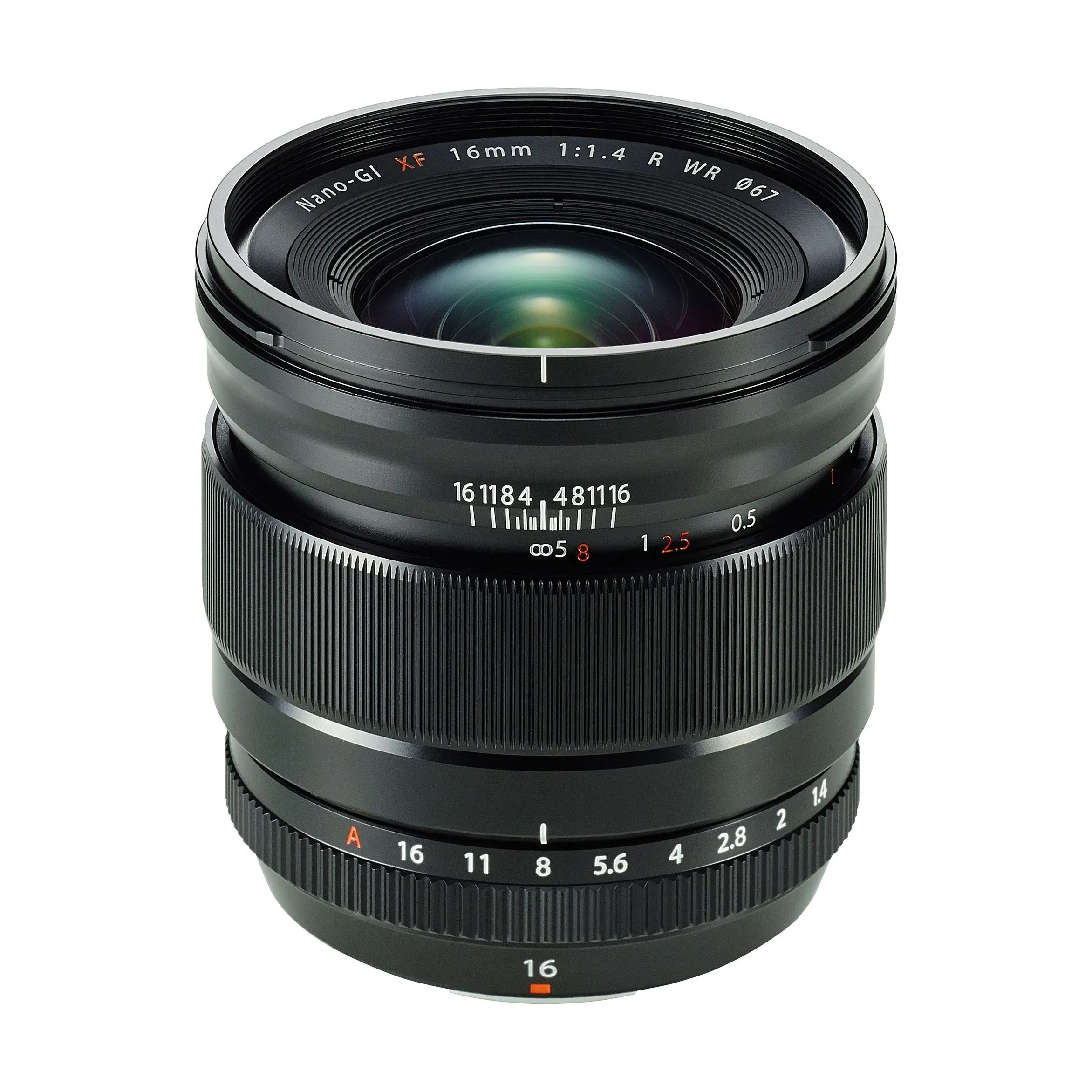
- XF16mm F1.4 R WR
Pick the F1.4 if you shoot in low light or close up and want blurred backgrounds, sharper corners and a focus clutch, and don't mind 375 g.
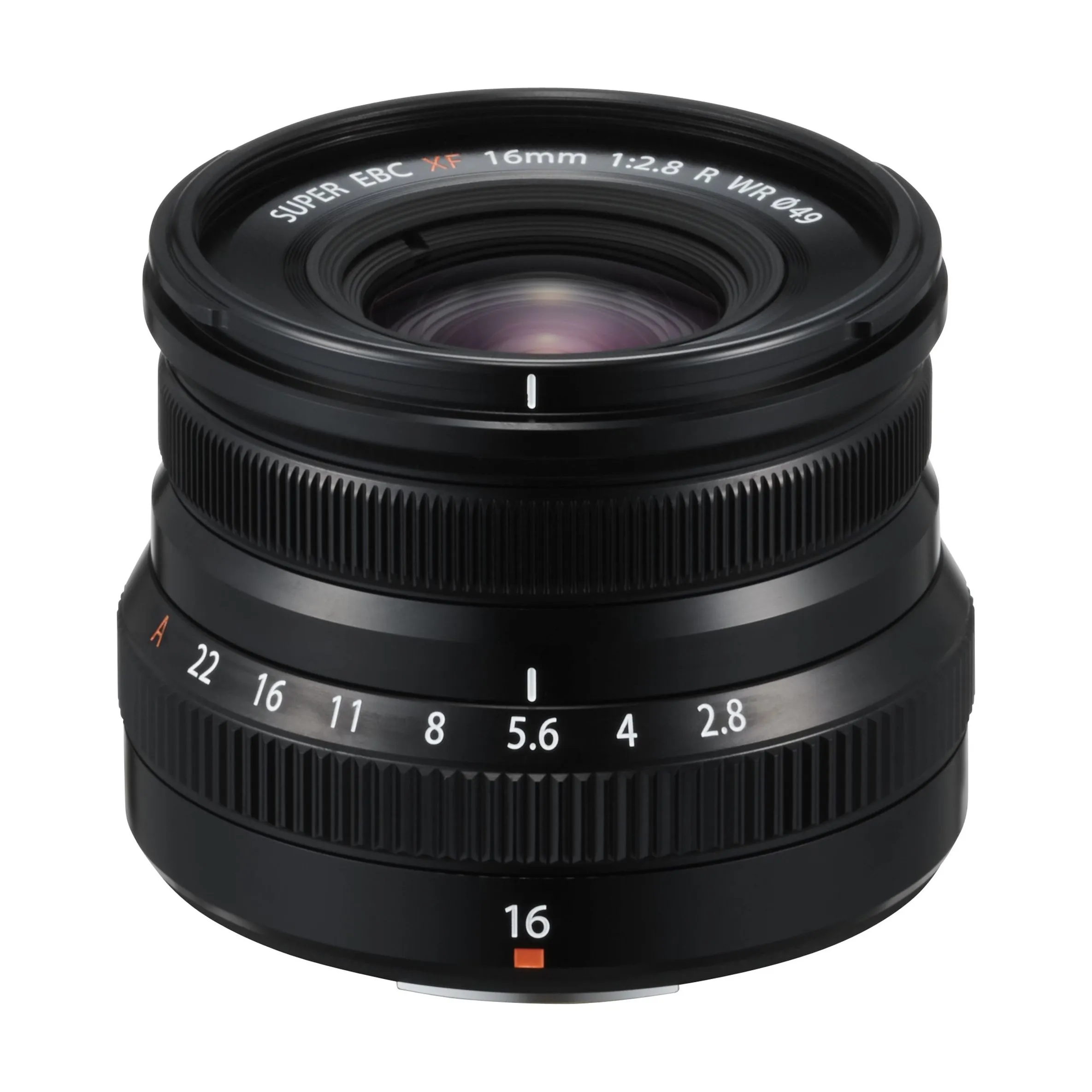
- XF16mm F2.8 R WR
Pick the F2.8 if you want a small, sealed 24mm equivalent for travel or the street: reviewers say it gives up little, for far less money and weight.
Specs side by side
| XF16mm F1.4 R WR | XF16mm F2.8 R WR | |
|---|---|---|
| Mount | Fujifilm X | Fujifilm X |
| Focal length | 16mm | 16mm |
| Max aperture | f/1.4 | f/2.8 |
| Autofocus | Yes | Yes |
| Stabilised | No | No |
| Weather resistant | Yes | Yes |
| Weight | 375 g | 155 g |
| Filter thread | 67 mm | 49 mm |
| Closest focus | 0.15 m | 0.17 m |
| Optics | 13 elements in 11 groups | 10 elements in 8 groups |
| Barrel | Metal | Metal |
| Bayonet | Metal | Metal |
| Aperture ring | Yes, marked | Yes, marked |
| Other controls | Focus clutch, Distance scale | None |
| Aperture blades | 9 | 9 |
| Released | 2015 | 2019 |
| Status | Current | Current |
| Used (US) | ≈ $250–$400 | ≈ $200–$300 |
| Used (UK) | ≈ £200–£300 | ≈ £150–£250 |
| Used (EU) | ≈ €300–€400 | ≈ €200–€250 |
Greyed rows are the same on every lens. Used prices are rounded ranges from listings over the last 12 months.
What actually differs
Both lenses are weather resistant and give the same 24mm-equivalent view, but they’re built for different jobs. The F1.4 is two stops faster and, as SansMirror found, renders out-of-focus backgrounds much more smoothly, which matters most at its 15 cm close focus. It also has a push-pull focus clutch with distance and depth-of-field scales. The F2.8 has a narrow fly-by-wire focus ring with no markings.
The F2.8 is the one you can pocket: 155 g against 375 g, and 49 mm filters against 67 mm. Keith Wee also noticed its slimmer barrel blocks less of an X-Pro’s optical viewfinder.
What owners say
Reviewers who used both agree the F1.4 is the better optic, but not by as much as the price gap suggests. SansMirror, which bought the F2.8 and borrowed the F1.4 from B&H, found the F1.4 sharper, especially in the corners, while the F2.8 was very good in the centre and good in the corners wide open, with a little more coma. The F2.8 also focused more snappily. Keith Wee, reviewing a Fujifilm loaner of the F2.8, put the gap as excellent against very good, and noted the F1.4 cost two and a half to three times as much.
5050 Travelog thinks comparing them directly isn’t fair: the F2.8 is meant to be the cheap, compact option, and for travelling light the author found it worth a close look. In his F1.4 review he valued the faster lens for low light and shallow depth of field, and suggests the F2.8 for smaller bodies and minimal kits.
Used and price
At launch the F1.4 was $999 and the F2.8 $399, according to 5050 Travelog. Used, the gap is much smaller; the used-price rows in the table above show where each one has sat over the last year.
From maker specs and public discussions. We haven't tested these lenses ourselves.