Lenses · Comparison · Updated
XF23mm F1.4 vs F2 vs F2.8
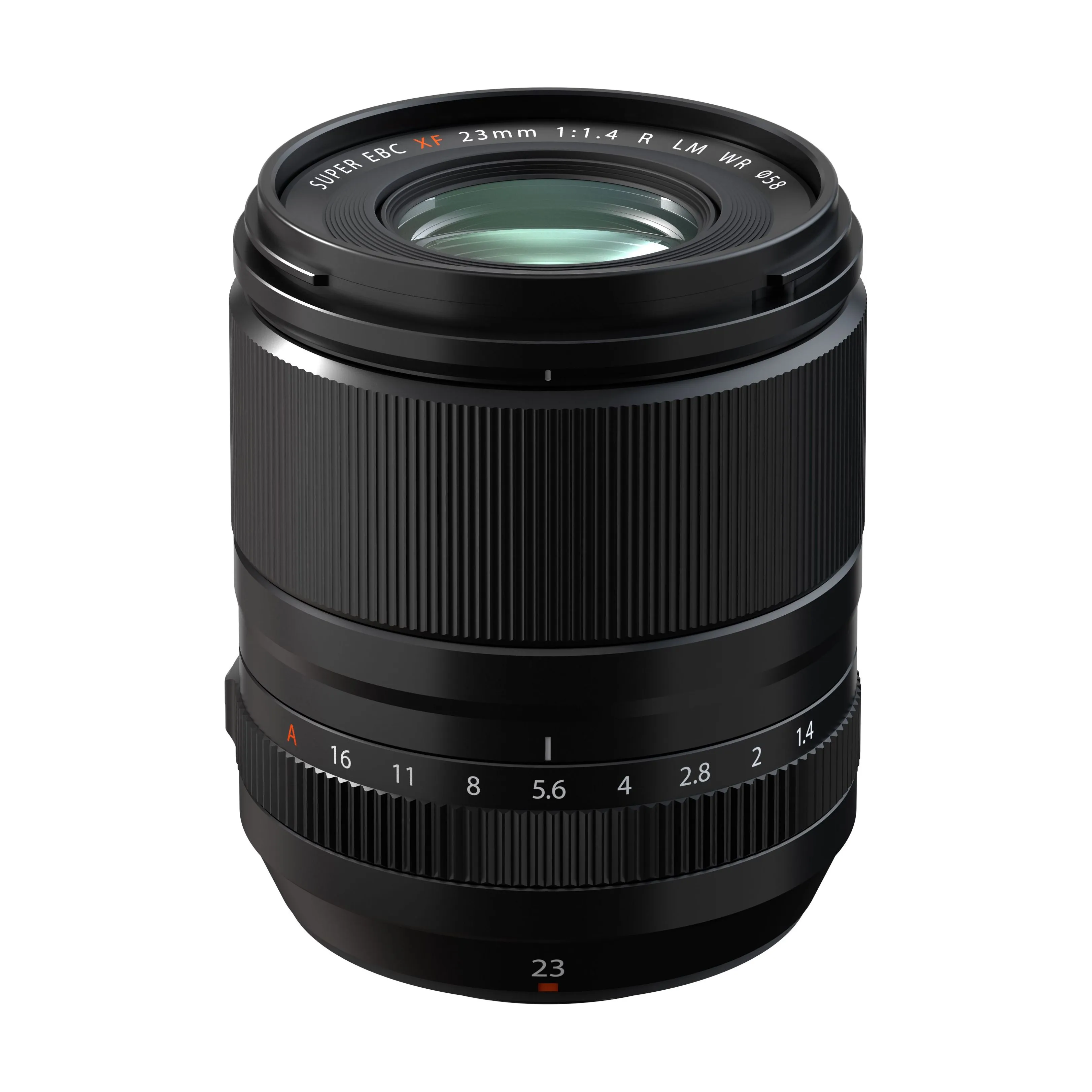
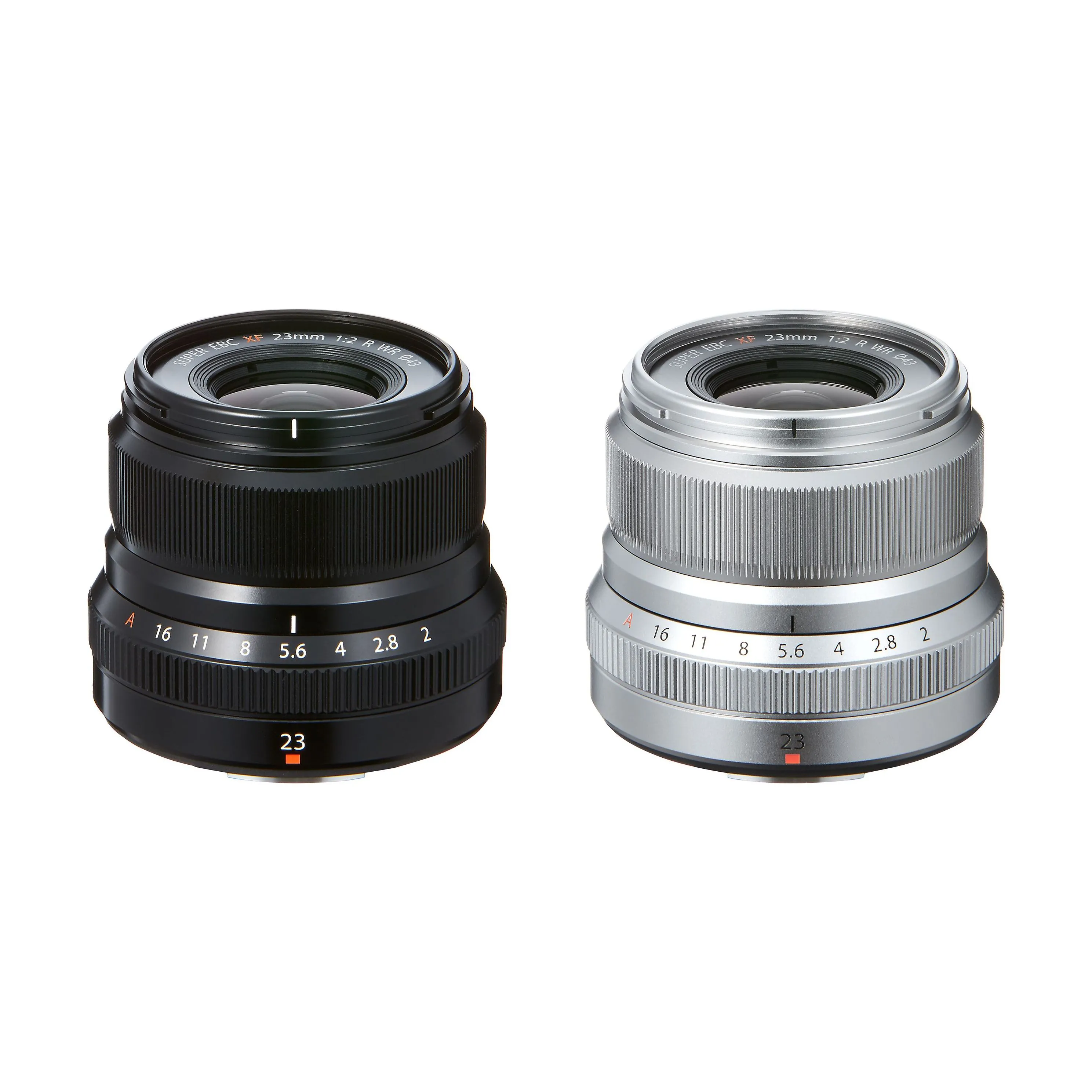
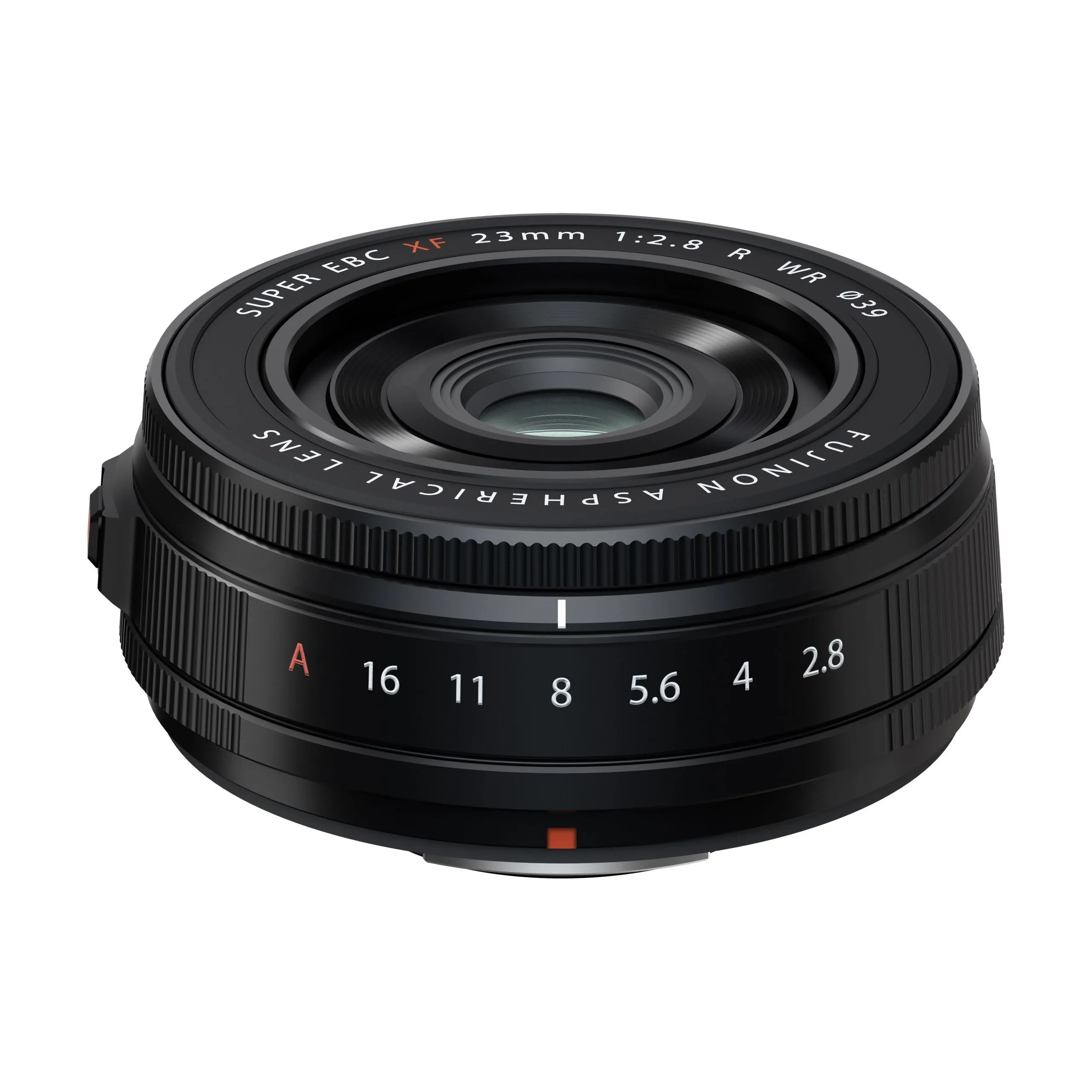
Fujifilm makes three weather-sealed 23mm XF primes. The F1.4 R LM WR is the fastest and biggest, and Cameralabs found it sharper than the F2; the F2 is the compact middle ground, and the F2.8 pancake gives up speed and edge sharpness for size.
Which one
- XF23mm F1.4 R LM WR
Pick the F1.4 R LM WR if image quality comes first: reviewers found it sharp to the corners wide open, with smoother bokeh and quiet AF.
- XF23mm F2 R WR
Pick the F2 if you want a small, quick-focusing sealed lens for about half the price and can live with softer far corners.
- XF23mm F2.8 R WR
Pick the F2.8 if size beats everything: a 90 g pancake that turns an X body into a near-compact, with soft edges and a noisy AF motor.
Specs side by side
| XF23mm F1.4 R LM WR | XF23mm F2 R WR | XF23mm F2.8 R WR | |
|---|---|---|---|
| Mount | Fujifilm X | Fujifilm X | Fujifilm X |
| Focal length | 23mm | 23mm | 23mm |
| Max aperture | f/1.4 | f/2 | f/2.8 |
| Autofocus | Yes | Yes | Yes |
| Stabilised | No | No | No |
| Weather resistant | Yes | Yes | Yes |
| Weight | 375 g | 180 g | 90 g |
| Filter thread | 58 mm | 43 mm | 39 mm |
| Closest focus | 0.19 m | 0.22 m | 0.2 m |
| Optics | 15 elements in 10 groups | 10 elements in 6 groups | 8 elements in 6 groups |
| Barrel | Metal | Metal | Metal |
| Bayonet | Metal | Metal | Metal |
| Aperture ring | Yes, marked | Yes, marked | Yes, marked |
| Other controls | Aperture lock | None | Aperture lock |
| Aperture blades | 9 | 9 | 11 |
| Released | 2022 | 2016 | 2025 |
| Status | Current | Current | Current |
| Used (US) | ≈ $800–$850 | ≈ $300–$400 | ≈ $400–$500 |
| Used (UK) | ≈ £500–£600 | ≈ £200–£250 | ≈ £350–£400 |
| Used (EU) | ≈ €550–€700 | ≈ €300–€350 | ≈ €350–€450 |
Greyed rows are the same on every lens. Used prices are rounded ranges from listings over the last 12 months.
What actually differs
All three are 35mm-equivalent on APS-C, weather resistant and have an aperture ring. The real split is size against speed. The F1.4 R LM WR weighs 375 g and takes 58 mm filters. The F2 is less than half that at 180 g with a 43 mm filter, and the F2.8 pancake halves it again to 90 g and 39 mm.
The motors differ too. The F1.4 uses a linear motor, which Photography Blog found fast and almost silent. Reviewers of the F2 found it quick and quiet. The F2.8’s motor is very audible, according to Photography Blog’s F2.8 review. The F2.8 has the most blades (11) and focuses close at 20 cm, against 19 cm for the F1.4 and 22 cm for the F2.
What owners say
Cameralabs tested the F1.4 R LM WR against the F2 directly. The F1.4 was sharp across the frame wide open; the F2 did fairly well but was much softer in the far corners, with busier bokeh. Cameralabs still recommends the F2 for buyers who put size and price first. Photography Blog makes a similar point from the other side: the F2 is much smaller and lighter, but a stop slower.
The F2 has loyal fans. Digital Photography School’s reviewer chose it over the older f/1.4 with his own money and gave it 5/5.
The F2.8 is the travel pick. Digital Camera World calls it the ideal X-system travel lens but saw some AF misses. Photography Blog found its centre sharp but the edges in need of f/8, and calls it smaller, lighter and cheaper than the other two.
Used and price
The F2 launched at $449, about half the original f/1.4’s $899 according to Digital Photography School. Photography Blog put the F1.4 R LM WR at about $899 at launch.
From maker specs and public discussions. We haven't tested these lenses ourselves.